When delivery timelines compress, it helps to keep quality and implementation in one orbit. QASolvex pairs disciplined testing with hands-on engineering so you can move from wireframes to production without losing traceability. On this page we outline how we support frontend, full-stack, and mobile work streams – each described in fresh language and mapped to practical outcomes.
Frontend development
Modern browser platforms reward teams that treat the UI as a product, not a skin. We lean on a mature JavaScript ecosystem – component libraries, design tokens, bundlers, and accessibility tooling – so features ship with fewer regressions. That openness also means we can adapt quickly: whether you need a marketing surface, a dense operations console, or a progressive web experience, the stack flexes without locking you into a single vendor.
Across industries we have delivered responsive SPAs, server-rendered experiences, and hybrid shells where web content sits inside native containers. The through-line is predictable delivery: thin vertical slices, measurable performance budgets, and close collaboration with your QA function so each release keeps its quality bar.
React
We use React when you want a composable UI model, strong community momentum, and a smooth path toward shared component systems. For public pages and content-heavy routes we often pair it with server rendering or static generation so first paint and SEO remain healthy, while interactive areas hydrate only where they need to.
Why teams choose it
Mature patterns for accessible, keyboard-friendly interfaces
Fits SSR and edge-friendly hosting models when discoverability matters
Strong concurrent rendering story for complex, data-rich views
Natural stepping stone toward React Native if you later unify mobile surfaces
Angular
Angular remains a pragmatic choice when governance, long-lived enterprise modules, and uniform structure outweigh micro-library churn. Typed templates, modular packaging, and a first-class CLI make it straightforward to onboard larger squads without inventing conventions from scratch.
Where it shines
Opinionated architecture that scales across multiple feature teams
Predictable upgrades when you embrace the flagship toolchain
Server-side rendering options when canonical URLs and payloads need discipline
Full stack development
Most products today are glue: databases, APIs, auth, background jobs, and frontends that all have to agree on contracts. QASolvex engineers cover that surface without romanticizing complexity – we pick boring-to-operate defaults, document boundaries, and leave automation hooks for the QA team you already trust.
On the server we frequently reach for Node.js when TypeScript can flow from handlers to shared DTOs, keeping validation and serialization consistent. Data often lands in PostgreSQL, and where a managed layer accelerates launch we integrate Supabase for relational storage, row-level policies, realtime channels, and auth flows that stay close to Postgres semantics. Presentation tiers commonly include React or Angular fragments so UI velocity stays coupled to the same backlog.
We augment those anchors with pragmatic extras – message queues when workloads fan out, object storage when media dominates, CDN caching when latency budgets tighten – always chosen against your regulatory posture and uptime targets.
TypeScript across the boundary
TypeScript gives us one language for narrowing unknowns from the HTTP edge down to persistence helpers. It is equally useful whether you are greenfield or modernizing brownfield code: we can layer types onto incremental modules, convert risky corners first, and keep shipping while the codebase becomes safer.
Operational wins
Safer refactors thanks to gradual typing instead of brittle string contracts
Rich editor tooling shared by frontend and backend contributors
Modern ECMAScript features with transpilation tuned for your browsers or runtimes
Encapsulated modules that mirror how QA thinks about testable units
Mobile development
Native polish, release trains, and store policies are a different sport from web deploys. QASolvex helps you plan the right shape – fully native, hybrid, or multi-platform – then executes with the same rigor we bring to testing: traceable builds, device labs, and feedback loops that start before you cut a release candidate.
We cover product discovery, interaction design handoffs, implementation, hardening, and post-launch monitoring. Because mobile surface area explodes (form factors, OS versions, carrier quirks), we pair engineering with continuous QA so regressions do not reach production audiences.
iOS
We deliver Swift-driven experiences that respect Human Interface expectations, background execution limits, and App Store review nuance. Testing spans representative iPhone and iPad matrices so layout, Dynamic Type, and privacy prompts behave as reviewers and users expect.
Android
Kotlin-first implementations target current API levels while keeping backward compatibility where your analytics say it matters. We validate against diverse OEM skins, screen densities, and notification channels so the same build feels native rather than ported.
Cross-platform and shared UI
When budget or time-to-market favors one codebase across iOS and Android, we evaluate React Native, Flutter, or other mature stacks against your performance and native-API needs. The goal is not novelty – it is a maintainable shared layer with escape hatches for platform-specific tuning.
UI & UX for mobile
Experience design is iterative: clickable flows early, motion that respects reduced-motion settings, and copy that survives localization. Designers and engineers embed together so gestures, haptics, and offline states remain coherent.
Architecture & backends for apps
We blueprint sync strategies, caching, and API surfaces before screens multiply. Backend-for-frontend layers, streamlined auth, and observability hooks keep mobile clients honest about latency and failure modes.
Wearables & companion experiences
Where dashboards belong on wrists or tethered peripherals, we scope constrained UI kits, pairing flows, and power budgets so companion apps augment – not drain – your core product.
.NET-centric multi-platform mobile stacks
If your organization anchors on Microsoft tooling, new greenfield apps today typically gravitate toward .NET MAUI for multi-platform UI, sometimes combined with Blazor Hybrid when a shared web-based UI should run inside native shells. Classic Xamarin.Native and Xamarin.Forms are largely in maintenance or migration mode – we still support and modernize those codebases when capital and risk demand it, but we do not position them as the default starting point for net-new mobile programs.
QA as part of mobility
Regardless of stack, mobility only succeeds when exploratory sessions, automation, and device farms align on the same backlog. Because testing is native to QASolvex, your mobile roadmap inherits traceable coverage instead of bolt-on checkpoints.
[ Representative engineering work ]
Case studies
Snapshots from shipped interfaces – from public-sector storytelling to data dashboards and tooling. Click an image for a closer look.
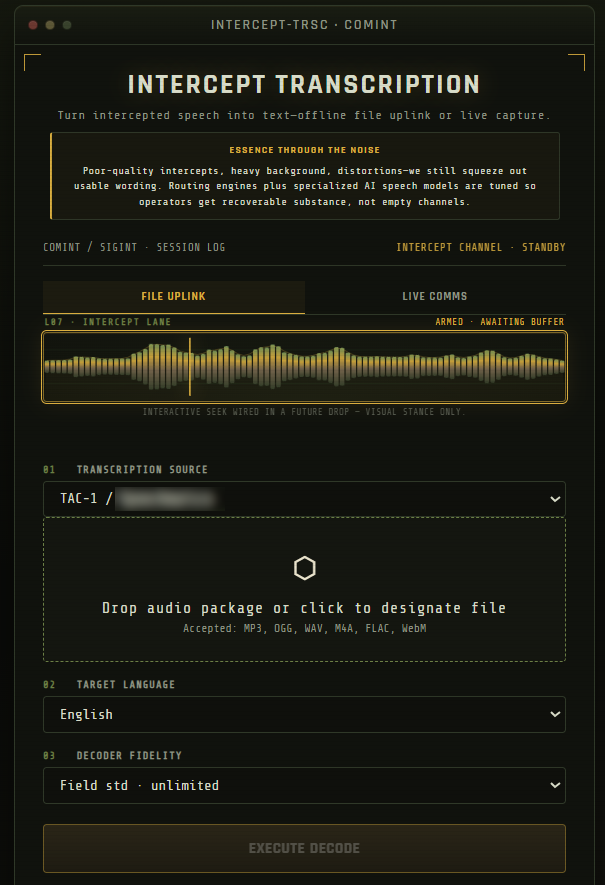
Intercept Transcription
Specialized dark console for audio uplink, routing, and AI-driven transcription fidelity
FrontendBackendAIComplex UI
Ukrainian Veterans IT Association
Impact hero, motion-ready layout, bilingual IA
FrontendUX
Ukrainian Veterans IT Association
Contact funnel with monochrome grid typography
FrontendForms
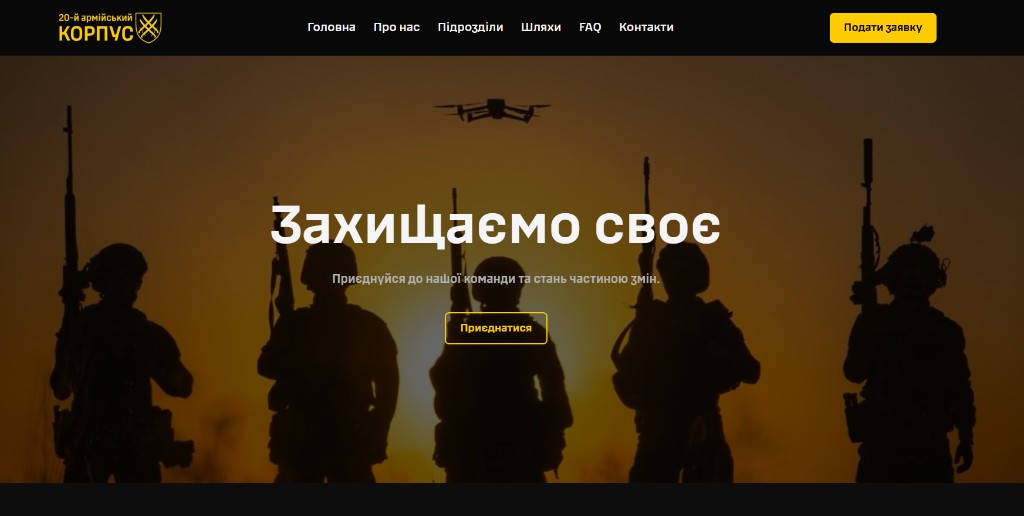
20th Army Corps
Recruitment storytelling with cinematic hero photography
FrontendBrand UI
23rd Separate Reconnaissance Battalion
Layered typography system on a high-contrast narrative layout
FrontendVisual design
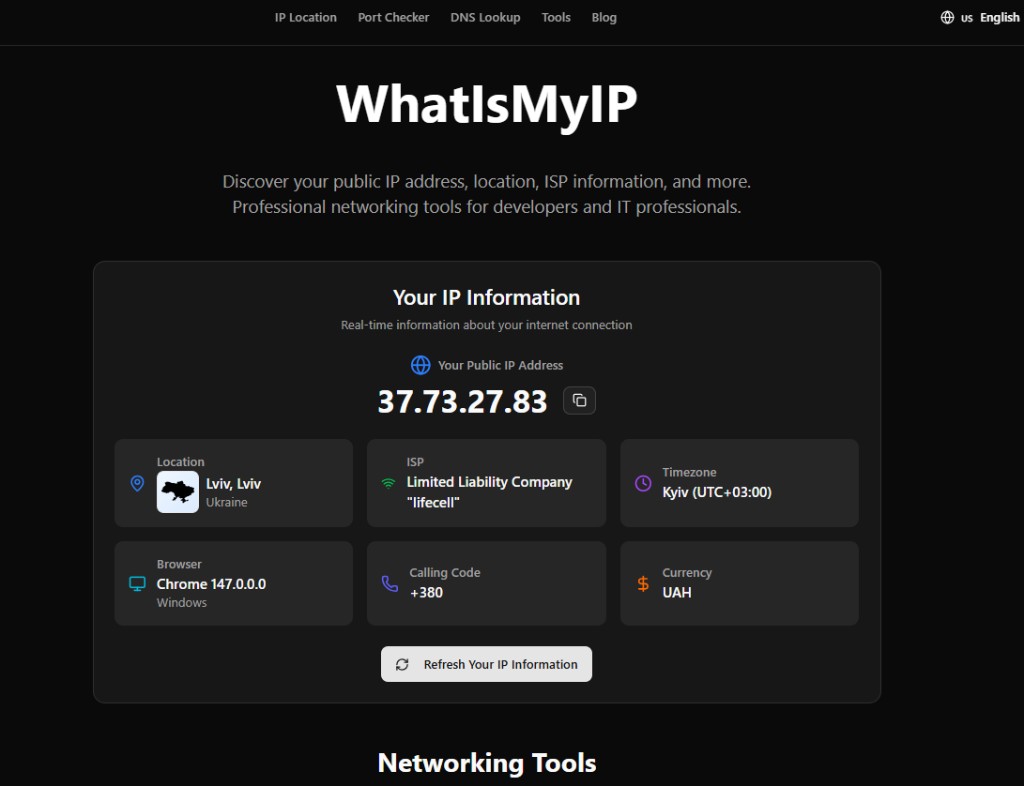
WhatIsMyIP
Dense networking dashboard grid with realtime data cues
FrontendFull stack
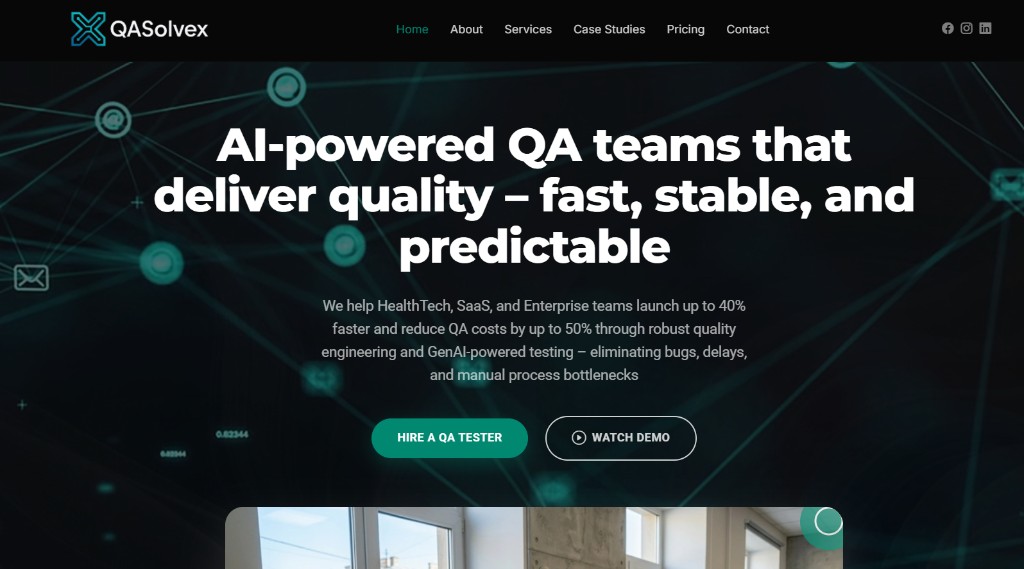
QASolvex marketing site
Product narrative, dual CTAs, and trust-forward hero art
FrontendConversion UX
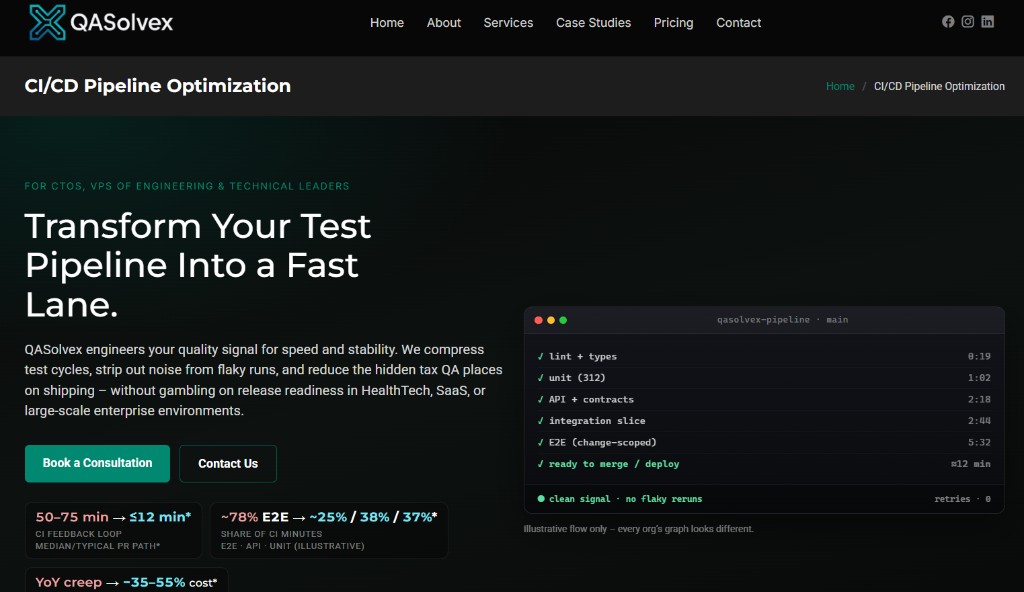
CI/CD Pipeline Optimization
Offer landing with proof points and terminal-style proof panel
Localized job discovery with anchored search chrome
FrontendFull stack
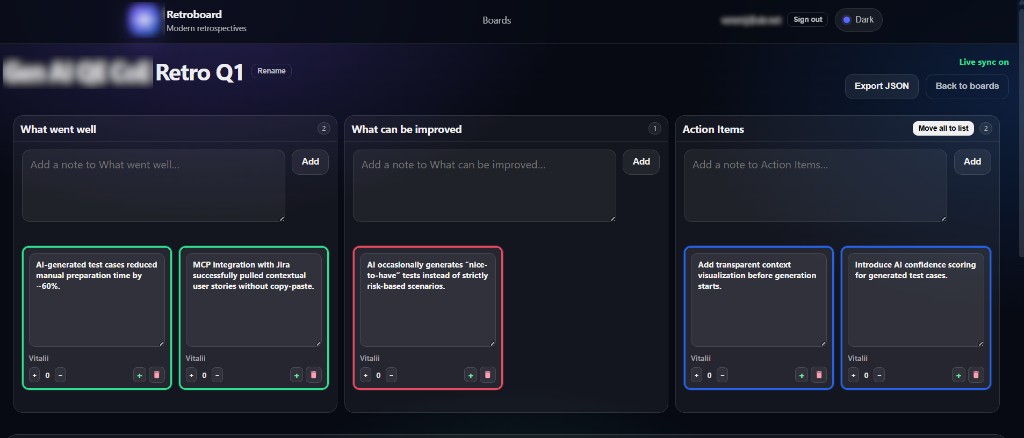
Retroboard
Collaboration board UI with live sync and export affordances
FrontendBackendProduct UI
How engagements usually run
Most partners begin with scope alignment workshops, spike the riskiest integrations, then iterate in two-week delivery slices. Frontend, backend, and mobile contributors stay in lockstep with QA leads so instrumentation, selectors, and environment parity land early – shortening the gap between “dev complete” and “release ready.”